Once the dough has risen, punch it down gently to release the air. Transfer it to a lightly floured surface. Roll the dough out into a large rectangle or circle, aiming for a thickness of about 1/2 inch (1 cm).
Using a round cookie cutter or a glass, cut out circles from the dough. Gather the scraps, re-roll them, and cut out more circles until all the dough is used.
If you are using the ricotta and parsley filling, place a small teaspoon of the mixture in the center of half of the circles. Gently top with another circle and press the edges firmly to seal, creating a small stuffed bun. For plain banycski, simply leave the circles as they are.
Place the prepared banycski on a baking tray lined with parchment paper, leaving a little space between each one. Cover them loosely with the towel and let them rise again for another 20-30 minutes.
Preheat your oven to 180°C-190°C (350°F-375°F). In a tiny bowl, mix the egg yolk with 1 teaspoon of oil or milk to create an egg wash. Gently brush this mixture over the tops of the risen banycski for a beautiful, shiny, golden crust.
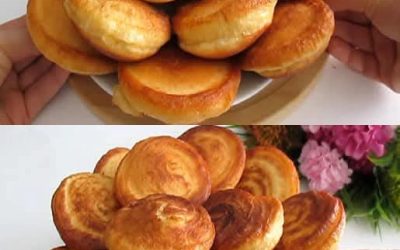
Bake for 15-20 minutes, or until they are puffed up and golden brown. As soon as they come out of the oven, brush them generously with the prepared butter and oil shortening. This step is crucial for that soft, rich, and deliciously tender crust.
Variations
The beauty of banycski lies in their adaptability. You can easily transform this basic recipe to suit your taste. For a sweet version, omit the salt and fill the dough with a spoonful of sweet farmer’s cheese mixed with a little sugar and vanilla, or even a piece of fruit like a plum or apricot. You can also sprinkle the tops with coarse sugar before baking.
For a savory twist, experiment with different fillings. A classic combination is mashed potatoes mixed with fried onions and cheese. You could also use a spoonful of sauerkraut and mushroom mixture, or simply add some finely chopped, caramelized onions directly into the dough. Adding a sprinkle of poppy seeds, sesame seeds, or coarse salt on top before baking adds both flavor and texture.
Tips
Ensuring your liquids are lukewarm is key. Too hot and they will kill the yeast, too cold and the yeast won’t activate properly, resulting in dense banycski.
Don’t be afraid of a slightly sticky dough. It is better to have a softer, stickier dough than a dry, stiff one, as this will yield a much fluffier final product. Use a little oil on your hands when kneading to manage the stickiness.
The final brush with butter and oil after baking is not optional. This step is what gives banycski their signature soft, rich crust and keeps them from drying out as they cool.
Nutrition
The nutritional content of banycski will vary based on the exact ingredients used and the portion size. Generally, they are a source of carbohydrates for energy, coming from the flour. They also contain protein from the flour and any dairy in the recipe, as well as fats from the butter, oil, and any fillings. The yeast contributes small amounts of B-vitamins.
Healthy Benefits
While banycski are a comfort food, they can be part of a balanced diet. Using simple, whole ingredients means you are avoiding the preservatives and additives often found in store-bought bread products. The milk and any dairy fillings, like ricotta, provide calcium for strong bones and teeth. By making them at home, you have complete control over what goes into them, allowing you to use higher quality oils or even incorporate whole wheat flour for added fiber.
Conclusion
Making banycski at home is a rewarding experience that fills your kitchen with an irresistible, comforting aroma. This simple recipe proves that you don’t need complicated techniques to create something truly delicious. With their soft, buttery texture and endless possibilities for customization, these little yeast cakes are sure to become a new favorite in your home. Serve them warm from the oven and watch them disappear.